


By Kimberly Casey | Kalorama Real Estate Expert | Washington, DC
Kalorama is where Washington’s most significant residential architecture lives.
It is not simply a luxury neighborhood. It is an estate neighborhood — within city limits.
For decades, Kalorama has attracted heads of state, business leaders, diplomats, and generational families seeking privacy, architectural distinction, and long-term value stability. I have had the privilege of representing some of the most prominent properties in this enclave, including the estate purchased by Jeff Bezos and the residence now home to President Obama.
These transactions reinforce what makes Kalorama historic estates so powerful: scale, security, and permanence.
What Defines a Kalorama Historic Estate?
Not every luxury home in 20008 qualifies as an estate.
A true Kalorama estate typically offers:
- Grand architectural scale
- Large lot size (rare within DC proper)
- Deep setbacks from the street
- Private gardens or gated entries
- Embassy-level security considerations
- Historic architectural pedigree
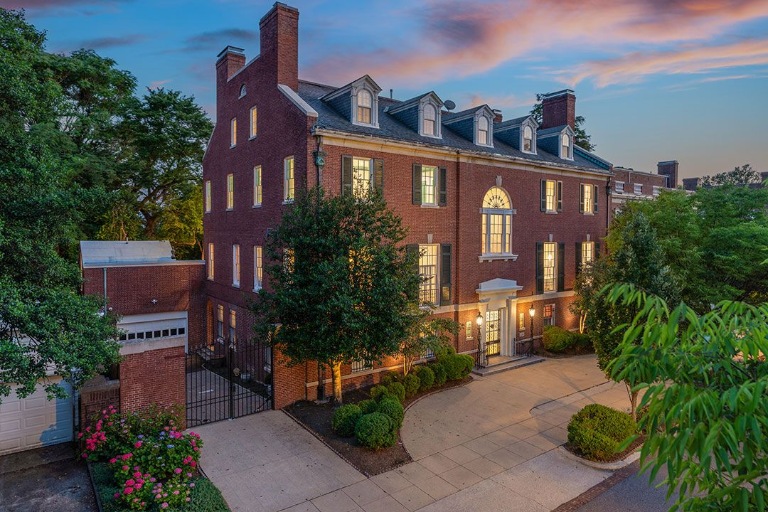
Many estates in Kalorama date to the early 1900s and reflect Beaux-Arts, Georgian Revival, Colonial Revival, and early European-inspired designs.
The craftsmanship is visible in:
- Limestone or brick façades
- Formal entry halls
- Sweeping staircases
- 10–12+ foot ceilings
- Original millwork and moldings
- Ballroom-scale entertaining spaces
These homes were built for entertaining at a national and international level.
That matters when evaluating long-term value.
Embassy Corridor Influence
Kalorama sits along Washington’s embassy corridor.
Diplomatic presence creates structural demand for estate-level homes with privacy and security.
This has several impacts:
- Consistent demand from international buyers
- Heightened security awareness
- Long-term occupancy patterns
- Stable pricing even during broader market shifts
Unlike trend-driven luxury markets, Kalorama estate homes benefit from institutional proximity — not nightlife proximity.
It is quiet, composed, and globally recognized.
Architecture as a Financial Asset
With $1B in career sales and an MBA in Finance, I evaluate Kalorama historic estates not only as residences but as assets.
Architectural pedigree holds value.
When a property has:
- Proven design lineage
- Estate-scale proportions
- Large lot size
- Walkable but insulated location
- Limited neighboring overdevelopment
It creates scarcity.
Scarcity supports appreciation.
In 2025 alone, 20008 saw:
- 18% year-over-year appreciation
- $3.136M average detached home pricing
- 33% of homes selling within 10 days
Estate-level homes often trade well above those averages.
Privacy Within the City
One of the defining features of Kalorama historic estates is privacy without isolation.
Unlike suburban estates, Kalorama offers:
- Immediate access to downtown DC
- Proximity to Georgetown
- Minutes to Dupont Circle
- Access to Rock Creek Park
- Major commuter routes nearby
Yet within the neighborhood, streets are quiet and residential.
It is possible to host global leaders at dinner and still walk your dog in complete calm the next morning.
That balance is extremely rare.
Renovating a Kalorama Historic Estate
Many buyers of estate properties modernize interiors while preserving architectural integrity.
When purchasing a Kalorama historic estate, buyers must evaluate:
- Structural condition
- Mechanical systems
- Roof integrity
- Basement waterproofing
- Electrical modernization
- Preservation considerations
Exterior alterations may require review under DC preservation guidelines depending on scope.
These homes deserve thoughtful renovation, not cosmetic intervention.
When done properly, modernization enhances both livability and resale value.
Insurance & Risk Planning for Estate Homes
Estate-level properties require estate-level risk planning.
High-value homes in 20008 often necessitate:
- Significant umbrella liability coverage
- Detailed system documentation
- Flood evaluation
- Water detection systems
- Security integration
Only 28% of high-net-worth households carry sufficient umbrella liability coverage.
Luxury advisory in Kalorama must include coordination beyond the purchase contract.
The Kalorama Estate Buyer Profile
Buyers of Kalorama historic estates are typically:
- International wealth holders
- Political leaders
- Multi-generational families
- Portfolio-driven investors
- Privacy-focused individuals
This is not speculative capital.
This is legacy capital.
They are purchasing stability, stature, and long-term positioning within Washington, DC.
Why Kalorama Estates Continue to Appreciate
Kalorama historic estates benefit from several structural advantages:
- Limited inventory
- Large lot scarcity within DC
- Embassy corridor proximity
- Architectural significance
- Long-term ownership patterns
- Global brand recognition
The combination of land value + architecture + political centrality creates durability.
It is one of the safest long-term luxury real estate plays in Washington, DC.
My Perspective on Kalorama Historic Estates
Having represented significant properties in this neighborhood and having advised clients at the highest levels of the market, I understand how these transactions unfold.
Estate sales in Kalorama require:
- Discretion
- Strategic pricing
- Sophisticated negotiation
- Financial modeling
- Global buyer positioning
These are not entry-level transactions.
They require advisory rooted in both local experience and financial discipline.
Final Thoughts
Kalorama historic estates are not simply homes.
They are architectural statements. They are long-term assets. They are part of Washington’s diplomatic and political fabric.
Within 20008, estate-scale homes continue to outperform because they offer something that cannot be recreated: space, privacy, and permanence within the capital of the United States.
For buyers and sellers navigating estate-level real estate in Kalorama, experience, discretion, and strategy are everything.
And in one of Washington’s most powerful neighborhoods, details matter.