

By Kimberly Casey, Washington DC Luxury Real Estate Expert
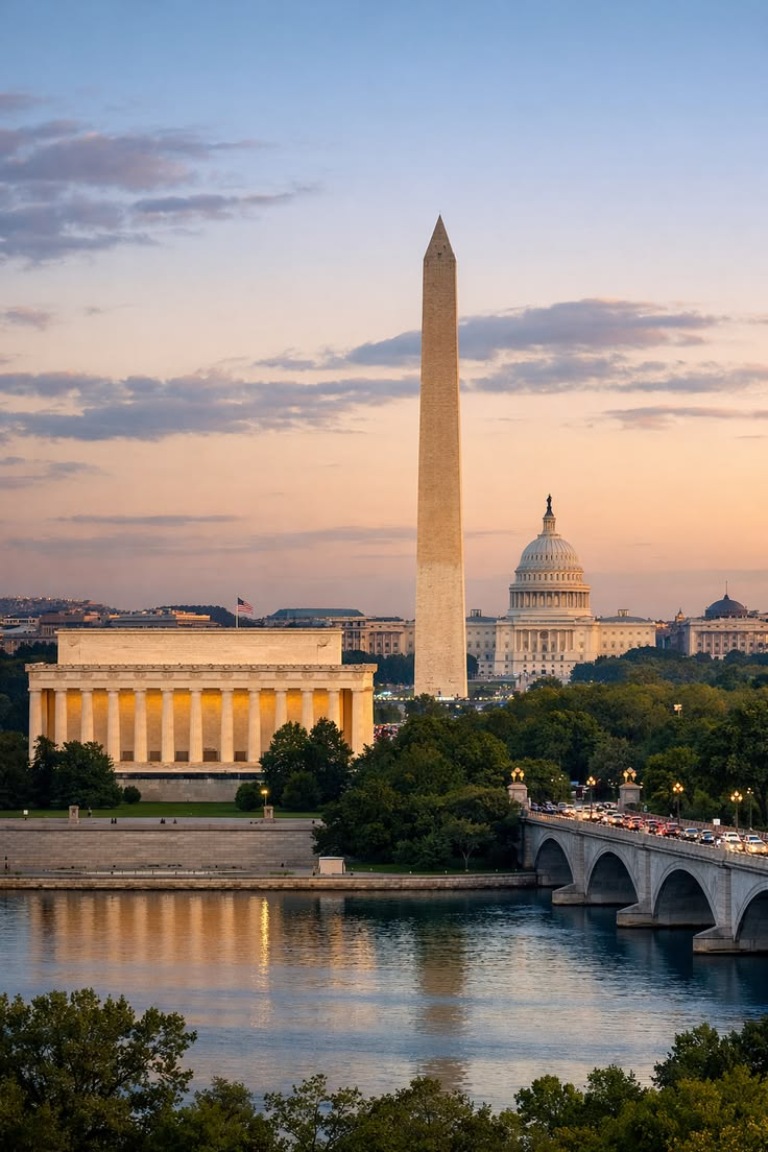
Momentum is building in Washington.
Luxury buyers are re-engaging decisively.
Liquidity is visible across the top tier.
Transaction volume is increasing.
And as we enter 2026, the Washington DC luxury real estate market is demonstrating measurable strength.
Recent data reflects:
- Washington DC median sale prices up approximately 20% year-over-year in early 2026
- DC metro area average sold prices increasing roughly 4–5% year-over-year in 2025
- Continued upward movement in regional home price indices
This is not speculation.
It is growth.
“This is what structural demand looks like,” says Kimberly Casey, a third-generation Washingtonian, Georgetown resident for over thirty years, and Washington DC luxury real estate advisor with more than $1 billion in career sales. “Washington doesn’t move erratically. It strengthens deliberately — and when it does, it tends to sustain.”
An Institution-Driven Market with Structural Stability
Unlike markets driven by a single industry cycle, Washington DC is anchored by:
- Federal government leadership
- International embassies and diplomats
- Global consulting and legal institutions
- Policy organizations and multilateral bodies
That institutional backbone creates long-term housing demand.
Mid-Atlantic projections for 2026 indicate:
- 9.7% increase in home sales
- 16.1% increase in active listings
- Approximately 2.6% continued appreciation
- Mortgage rates stabilizing near 6.15%
In a capital market, increased sales velocity combined with continued appreciation typically signals durable strength.
Liquidity Is Driving the Luxury Segment
Nationally, approximately 26% of transactions are cash. In Washington DC luxury real estate — particularly in Georgetown, Kalorama (20008), Wesley Heights, Spring Valley, Cleveland Park, Bethesda, and McLean estate corridors — cash transactions represent an even larger share of activity.
In the $4M–$8M segment, buyers are often:
- Portfolio-oriented
- Deploying equity liquidity
- Purchasing through trusts or LLC structures
- Focused on multigenerational wealth preservation
Rate sensitivity declines at this level.
“Luxury buyers in Washington DC are evaluating long-term value, not short-term rate fluctuations,” Casey explains. “They understand scarcity and replacement cost. When the right property becomes available, they act.”
Washington DC Compared to Global Capital Cities
From a valuation perspective, Washington remains compelling.
Approximate luxury price per square foot:
- London (Mayfair, Knightsbridge): $2,000–$3,500+
- New York (Prime Manhattan): $2,000–$3,000+
- San Francisco (Pacific Heights): $1,500–$2,200
- Paris (6th & 7th Arrondissements): $1,800–$2,500
- Tokyo (Minato, Roppongi): $1,200–$2,000
Washington DC prime neighborhoods:
- Georgetown: approximately $900–$1,400 per square foot
- Kalorama (20008): roughly $800–$1,200
- Wesley Heights / Spring Valley: typically $700–$1,100
- McLean estate corridors: frequently $600–$1,000
Despite being the political capital of the United States and one of the most influential cities in the world, Washington DC luxury real estate trades at a meaningful discount relative to its global peers.
“I have always believed Washington DC is undervalued relative to its global importance,” Casey says. “When you compare our pricing to London or Manhattan, the differential is significant. That gap represents long-term opportunity.”
Replacement Cost Is Reinforcing Value
High-end construction in Washington DC and Northern Virginia continues to face:
- Elevated labor costs
- Material volatility
- Regulatory and preservation requirements
In many instances, building a comparable luxury home today approaches — or exceeds — resale pricing in established neighborhoods.
When replacement cost converges with resale value in supply-constrained areas, long-term price stability often follows.
Prime Neighborhoods Continue to Outperform
Luxury micro-markets with limited supply remain especially resilient.
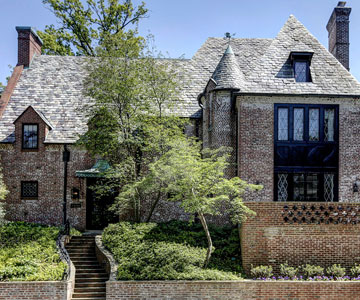
Georgetown’s historic preservation protections limit overdevelopment and protect architectural integrity.
Kalorama’s embassy corridor provides privacy and international stability.
Wesley Heights and Spring Valley offer estate-scale living within city limits.
McLean combines land, privacy, and favorable tax positioning.
Inventory growth in these neighborhoods remains modest relative to demand — reinforcing pricing durability.
Why Washington DC Endures
Washington DC does not behave like a speculative market.
It behaves like a capital city.
It attracts power, diplomacy, institutional leadership, and global influence.
Political cycles change.
Economic cycles evolve.
But Washington’s relevance remains constant.
As Casey notes, “People want proximity to influence, to institutions, to history. That demand is enduring.”
For buyers, sellers, investors, and developers seeking stability with upside, Washington DC luxury real estate remains uniquely positioned.
Strategic Outlook for 2026
For Buyers:
Price growth is measurable. Prime inventory remains limited. Early positioning remains advantageous.
For Sellers:
Quality presentation and disciplined pricing continue to be rewarded.
For Investors and Developers:
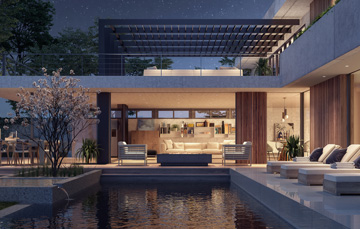
Estate-level finishes, traditional architectural warmth paired with modern functionality, and supply-constrained neighborhoods remain the strongest plays.
About Kimberly Casey: Washington DC Luxury Real Estate Authority
Kimberly Casey is a third-generation Washingtonian and Georgetown resident of more than thirty years. With over $1 billion in career sales, she is widely recognized as a Washington DC luxury real estate expert specializing in Georgetown, Kalorama (20008), Wesley Heights, Spring Valley, Cleveland Park, Bethesda, and McLean estate properties.
Her advisory approach blends macroeconomic data, neighborhood-level intelligence, global capital comparisons, and financial modeling — guiding buyers, sellers, investors, and developers through Washington DC’s luxury real estate market with precision.